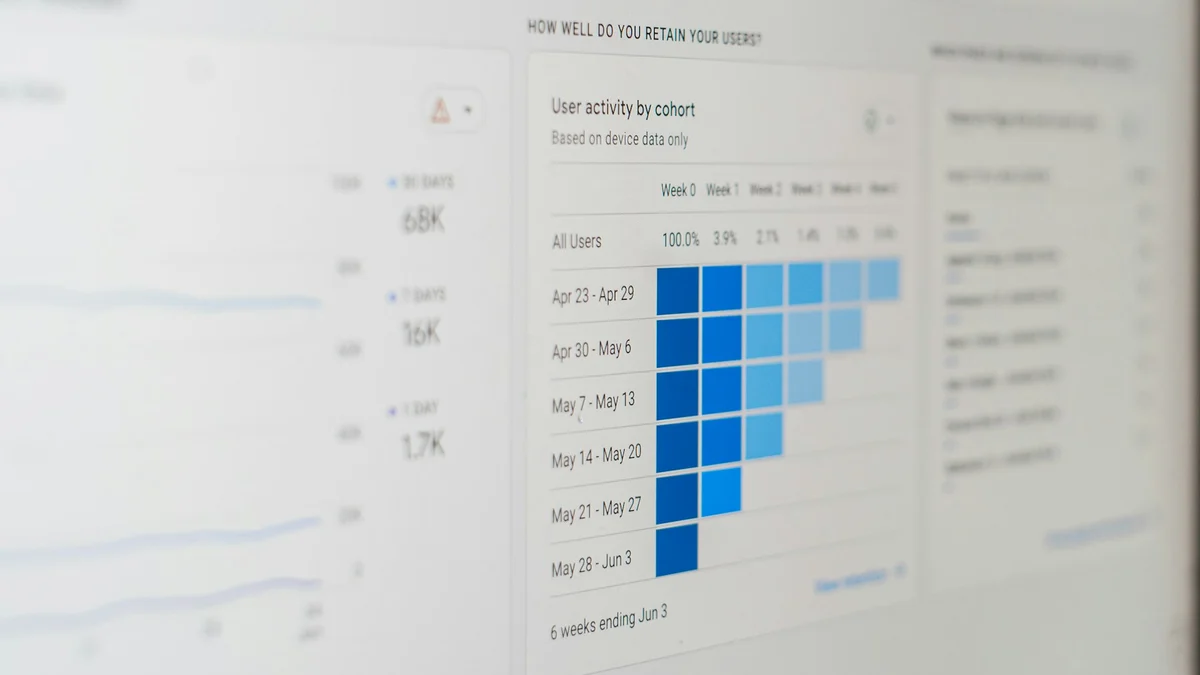
AI report totals 99.9%? Check counts before rounding
Counts 17,11 and 9 total 37 but rounded shares total 99.9%. Reproduce ordinary rounding and an explicit 100.0% display allocation.
Interactive controls could not load. Reload this page to try again; the content and guides below are still available.
Reload pageKitNelo Blog
Use AI for documents, spreadsheets, images and everyday tasks. Follow original prompt examples, compare outputs with source material and check product limits.
Published by the KitNelo site maintainers. How we source, check and correct articles
You can browse the articles below while search loads.
Counts 17,11 and 9 total 37 but rounded shares total 99.9%. Reproduce ordinary rounding and an explicit 100.0% display allocation.
The Duet research preview starts with a US Pro/Max waitlist. Use complete registration and materials specimens to verify facts, pending changes, conditional gaps and what changed between checks.
Audit JavaScript sorting with positive, negative and mixed-type specimens. Check default string order, mutation, finite-number validation and a complete reference implementation.
Use GitHub’s October 23 consolidated-app update to plan a controlled migration trial, with original code, three reference results and a reviewable notification-to-PR handoff.
Distinguish strict equality, an explicit error tolerance and lost integer information using three original review tasks, reference results and a bounded repair prompt.
Use Anthropic’s October 22 announcement and the Agent Skills specification to test loading, missing references, task selection and a human reference answer before trusting a migrated skill.
Work through three original points to compute a least-squares line, residuals and training error. Separate arithmetic from interpolation, extrapolation and causal claims with a reusable prompt and reference.
Use GitHub’s October 19 model-policy update to distinguish enabled, optional and editable. Work through enterprise, team and app evidence without treating a field as final user access.
Calculate accuracy, precision, recall and F1 from 100 original support-ticket examples. Check denominators, a 90% baseline and unsupported deployment claims in an AI-written report.
Use the October 20 business announcement to plan a complete fictional campaign exercise. Check capacity, price, pickup time and unknown facts separately from a consistent brand style.
Work through four original rows to explain 82.73% versus 35%, different channel mixes, common weights and the limits of causal claims in AI-generated analysis.
Turn Google’s October 19 ADK tutorial into an original report-task acceptance case. Separate progress from completion, interrupted speech from cancellation, and late results from current work.
Download three fictional rows, calculate each intermediate value and check current-versus-base pairs. Separate −4% net change,25% first-step recovery and 4.17% final recovery.
Use GitHub’s October 15 multi-repository update for scoped frontend/backend triage. Check preview access, source evidence and deployment state before requesting changes.
Check an AI statistics answer by hand: n versus n−1, variance versus standard deviation, units, missing values and the single-observation boundary.
Preserve the original file, distinguish file credentials from text watermarks, and keep a reviewable handoff record with correctly limited conclusions.
Check a 60/40 km/h journey using complete distance–time tables, compare equal-time travel, include a stop explicitly, and separate average speed from average velocity.
Use an original four-part evidence audit to separate Workspace app access, Search personalization, history and model-improvement uses after Google’s October 16 clarification.
Find the corresponding tool and start your task.