The workflow at a glance
For the original example 2, 4 and 6, the mean is 4 and the sum of squared deviations is 8. Describing these three values as the complete population gives √(8/3), approximately 1.633. Treating them as a sample and using the usual sample variance estimate gives √(8/2)=2. State purpose, formula and units together.
Tell the question what the observations represent
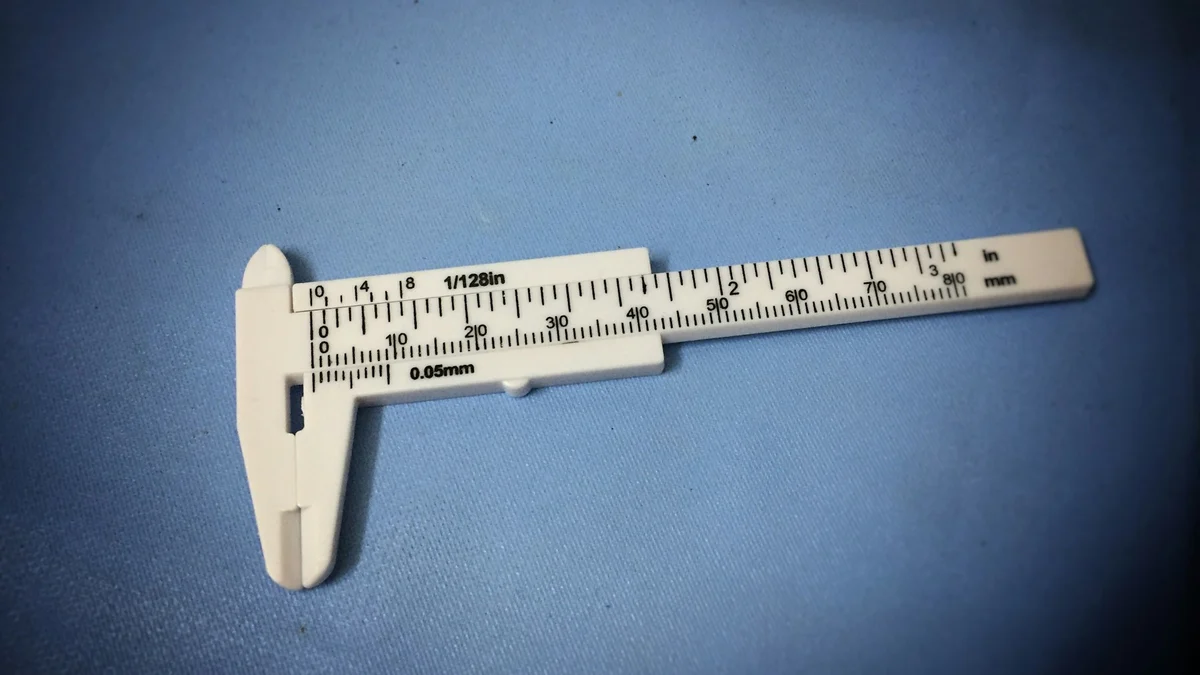
Imagine lengths of three small parts, measured in centimeters. These are constructed teaching values, not a real measurement report. If the task describes only these three specified parts as a complete collection, population standard deviation describes that collection. If they are a sample from a larger process and the task requests the usual sample statistic, use the n−1 formula.
Three observations do not make a reliable description of an entire production process, and a denominator choice cannot fix sampling bias. We are checking calculation conventions, not certifying quality or process capability. Real research requires a method appropriate to the design, not simply the smaller available number.
Calculate deviations and their squared total
| Observation x | x−4 | (x−4)² |
|---|---|---|
| 2 | −2 | 4 |
| 4 | 0 | 0 |
| 6 | 2 | 4 |
| Total | 0 | 8 |
Deviations summing to zero provide a basic check, not proof that the inputs and formula are correct. Variance has square-centimeter units; standard deviation returns to centimeters.
Different denominators answer different conventions
NIST’s measures-of-scale reference defines sample variance with an n−1 denominator and standard deviation as its square root. The official Python statistics documentation separately names population and sample variance and standard-deviation functions. Record the full function name rather than saying only that software calculated it.
For these values, population variance is 8/3 and sample variance is 4; the corresponding standard deviations are approximately 1.633 and 2. Do not label 8/3 as standard deviation or retain centimeter units after squaring. Reporting both numbers without explaining which matches the question is also incomplete.
Include the reason for the convention
The standard deviation is 2 because that is the formula.
Under the usual sample convention, s=√(8/(3−1))=2 cm. For the complete collection of these three objects, population standard deviation is √(8/3), approximately 1.633 cm.
Ask for the convention before the arithmetic
Data: 2, 4 and 6 cm. Explain how the formula differs if these are the complete objects of interest versus a sample from a larger population. Show n, mean, each deviation, squared-deviation sum, denominator, variance and standard deviation. Do not round intermediate values. State units. If the purpose is unspecified, present both conventions rather than silently choosing one.For spreadsheets, follow the sample-row formula checks before processing a full column. Preserve both the function and the data range.
Handle missing values and one observation explicitly
A blank is not zero. If a fourth part exists but its length is missing, automatically filling 0 cannot establish a complete four-part measurement set. Record the missing-data rule, included rows and effective count so a tool’s defaults do not silently change the denominator.
With one observation, the usual sample formula divides by zero and cannot legitimately return a sample standard deviation of 0. A complete one-object collection has zero population spread, which still does not prove measurement accuracy. Do not remove extremes to make the result look better; compare the different questions answered by the median and outlier checks.
Deliver one result with its calculation trail
A useful final statement is: values 2, 4 and 6 cm; usual sample standard deviation; n=3; mean 4; squared-deviation sum 8; s=2 cm. If you also give a population value, identify the complete collection it describes. Another reviewer can now reproduce the result instead of trusting a detached number.
Try a simple transformation check too. Adding 10 to every value leaves deviations and standard deviation unchanged. Multiplying every value by 2 doubles standard deviation and quadruples variance. This catches some formula and unit errors without replacing source-data review or the choice of statistical method.
Before accepting the answer
- Objects and sample or population convention are explicit.
- Effective n, mean and squared total can be recalculated.
- Variance is separate from standard deviation, with rounding only at the end.
- Units and missing-data rules are recorded.
- Single-observation or otherwise undefined cases are not invented as valid results.
Common questions
Which is correct, 1.633 or 2?
They describe the complete-collection and usual sample conventions in this example. Choose according to the question, not the preferred number.
Why not divide sample variance by n?
The usual sample variance estimate discussed here uses n−1. Describing a complete collection uses a different population convention; state the method.
Does a small standard deviation prove good data quality?
No. It describes spread in the supplied values. It does not independently establish measurement accuracy, unbiased sampling or acceptable business quality.