What changed
Treat the announcement as evidence of industrialization. Compare whole vehicles under matching market, configuration and test conditions. A journey still depends on usable energy, consumption and charging opportunities; cell metrics alone cannot settle it.
Locate the announcement at the correct product level
The global BMW announcement identifies Shenyang as the third Gen6 production location, supplying future China-built Neue Klasse models. BMW cites cell energy density more than 20% higher and charging-speed and range improvements up to 30%. These are manufacturer claims, not independent road-test results here.
The China manufacturing release adds inspection and assembly context. Battery production does not itself date an individual vehicle delivery. This article is published October 20; the original global announcement remains dated October 15.
| Level | Evidence a reader needs | Does not establish |
|---|---|---|
| Cell | Comparison baseline and measurement conditions | The same reduction in vehicle consumption |
| Pack | Usable energy and vehicle integration | Identical range across models |
| Vehicle | Configuration and local test specification | Identical distance on every route |
| Order | Actual channel delivery arrangements | Collection on the factory-start date |
Work through a 600 km journey instead of multiplying a headline
The following planning exercise uses invented values, not BMW specifications or charger measurements. Assume 75 kWh usable energy and 18 kWh/100 km consumption. Full-to-empty arithmetic gives 75÷18×100=416.7 km. A practical plan should not treat theoretical depletion as a safe arrival strategy.
An 80%-to 20% operating window uses 45 kWh and covers 250 km under that assumption. A 600 km journey therefore needs charging locations, alternatives and a separately checked final leg. When consumption changes, recalculate the legs instead of multiplying an old itinerary by a news percentage.
At 22 kWh/100 km, the same 45 kWh window covers about 204.5 km. This is a change in the exercise’s assumption, not a measured weather penalty for a real car. Stop counts cannot be determined simply by dividing total distance: station spacing and arrival reserves constrain individual legs.
Ask how much energy is added, and under what conditions
Our editorial recommendation is to define each stop by arrival charge, target charge, required energy, station conditions and waiting time. For the invented 75 kWh pack,20% to 80% requires 45 kWh. If average power over that interval were 90 kW, the energy-only calculation would be 30 minutes; at 150 kW it would be 18 minutes.
Those average powers are exercise inputs, not a Gen6 charging curve. Peak power is not interval-average power. Neither calculation includes queues, connection, payment or temperature-management delays. Matching vehicle and charging-window data are needed before a news claim can support a purchase comparison.
Three useful responses to the same news
Researching the technology
Keep cell, pack and vehicle metrics separate and retain the original comparison baseline.
Choosing a replacement car
Find market- and configuration-specific vehicle information before checking your regular route.
Travelling soon
Plan around verified current vehicles and stations, with an alternative stop; future products cannot be a departure condition.
Value the milestone without skipping the remaining evidence
Production is closer to manufacturing delivery than a concept demonstration, but it is not the entire chain. Use the concept-versus-production comparison to separate confirmed information from facts still requiring vehicle or order evidence.
As in the Roadster performance-conditions analysis, a comparison becomes useful when configuration and conditions answer your actual task. Combining unrelated best-case figures does not do that. This article gives no instructions for opening or modifying a high-voltage battery.
Keep unresolved questions visible
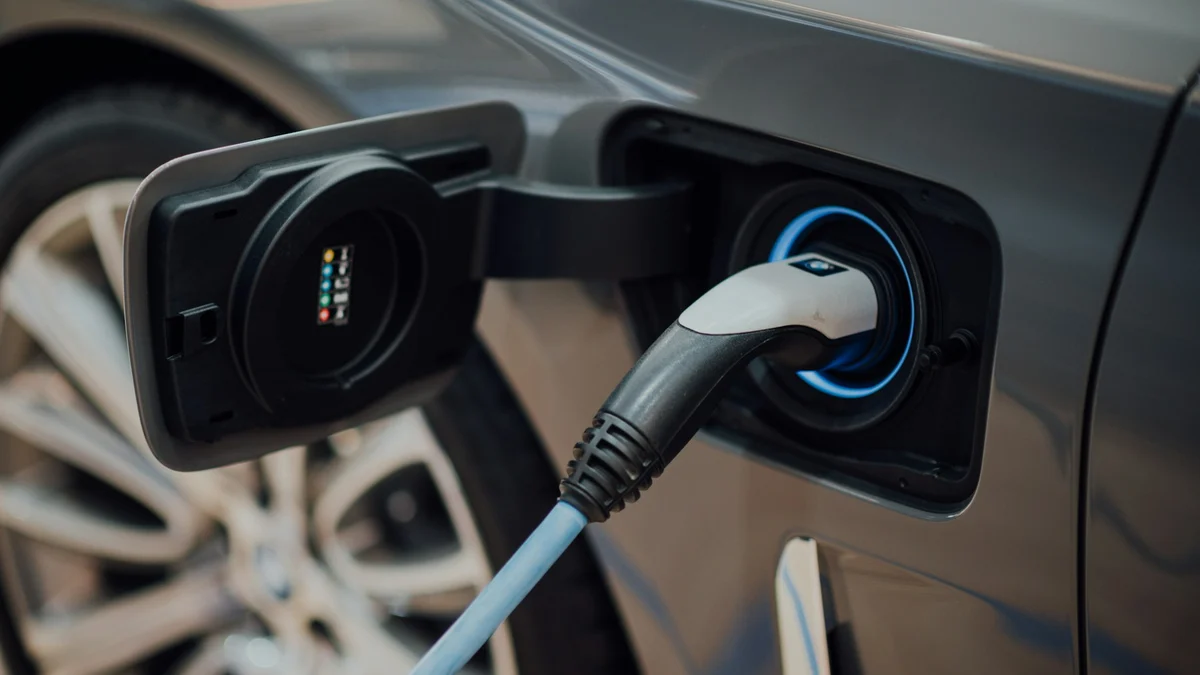
We have no vehicle road test, live stock check, personal charging bill or subsidy dataset. The cover is a general charging illustration, not the Shenyang line, a Gen6 pack or a new-model test. Obtain capacity, charge curves and delivery dates from the relevant model and sales information.
A substantive follow-up would add verified vehicle specifications, delivery milestones or comparable testing. Refreshing a date would add none of those. For now, prepare a route-assumption sheet and leave unknowns unfilled until suitable evidence arrives.
Common questions
Can density gains predict my existing car’s range?
No. An existing vehicle has different hardware and operating conditions; this announcement also does not establish an upgrade path.
Why not calculate charging time from peak power?
Power changes across the charging interval. Using the peak throughout understates energy-transfer time and omits other delays.
When can I collect a car?
We have no individual-order evidence. A battery production start does not replace model-launch and sales-channel delivery information.