What changed
Separate research progress, public-road demonstration plans and usable service. Honda’s plan begins public-road testing from Japanese FY2027, not universal charging today. Only compatible vehicles and functioning equipped segments enter the transfer calculation. The route below is an ideal editorial exercise, not a Honda measurement.
The announcement date is October 5; an exhibit is not an open road
Honda’s original announcement, dated October 5, 2026, describes work with Taisei and Taisei Rotec and plans public-road demonstrations from Japanese FY2027, which begins April 1, 2027.
Honda’s October 19–23 ITS exhibition page includes dynamic wireless-power research. The exhibition window identifies research activity rather than an operating public charging service.
Retain three different time objects
- October 5, 2026
Original technical announcement
Foundational technology and future testing plans.
- October 19–23
ITS exhibition
A research display, not a road opening.
- From Japanese FY2027
Planned public-road demonstrations
Distinguish plans from an actually usable service.
Why the road and vehicle both need equipment
The research system has ground DC supply, road transmitter units and a vehicle receiver. A road marking alone cannot supply arbitrary EVs. Inspect vehicle, road and power as one compatibility chain.
The announcement places higher-power and durability work in later verification. Its verification direction of up to 150 kW is not evidence of every vehicle already receiving 150 kW continuously on ordinary roads. Identify whether each number is a research target, planned test or operating result.
A complete compatibility chain
Road segment
Where is equipment actually installed, powered and usable?
Vehicle
Does the specific vehicle have a matching receiver and supporting verification?
Operating conditions
What power, times and conditions apply to this test or service?
Do not count an entire 60 km trip as powered road
This is an original idealized exercise;100 kW is not a measured Honda output. A 60 km trip has only 0.6 km hypothetically equipped for continuous transfer. Assume 30 km/h on that segment and 100 kW continuously received throughout it, excluding transfer loss and driving consumption.
Transfer time is 0.6/30=0.02 hours, or 72 seconds. Ideal received energy is 100×0.02=2 kWh. Treating all 60 km as powered would use 2 hours and produce 200 kWh, a 100-fold overstatement under the stated conditions. The error is coverage, not multiplication.
With hypothetical effective coverage reduced to 0.3 km, otherwise unchanged, transfer lasts 36 seconds and supplies 1 kWh. This isolates coverage and continuity; it is not advice to drive at a particular speed to test equipment, nor a vehicle-range estimate.
| Case | Coverage used | Time | Ideal received energy |
|---|---|---|---|
| Stated hypothetical segment | 0.6 km | 72 seconds | 2 kWh |
| Wrongly use the whole trip | 60 km | 2 hours | 200 kWh: contradicts the premise |
| Half the effective coverage | 0.3 km | 36 seconds | 1 kWh |
A technology label substitutes for transfer evidence
Estimate energy from the whole journey and a nominal power merely because wireless charging roads exist.
Identify effective equipped segments, a matching vehicle and operating conditions before calculating transfer time; retain unknowns.
Turn the news into a concrete adoption question
For a fixed-route evaluation, retain an existing verified charging plan while asking the project operator about segments, receivers, test stage and operating conditions. Exhibition material does not replace operating documentation, compatibility records or measurements. We have driven no vehicle, installed no road and tested no transfer system.
For instantaneous power versus received energy, see the BMW iX5 peak/average charging analysis. For battery metrics and travel capability, read Gen6 density versus range claims. These explain units without independently validating Honda’s system.
Materials required before real evaluation
- Original announcement and event dates are retained.
- The target segment’s actual test or service state is identified.
- The target vehicle has supporting receiver compatibility evidence.
- Power, coverage, time, loss and driving consumption remain separate.
- The hypothetical exercise has not become a manufacturer test or guaranteed range.
Do not fill unknown conditions with attractive arithmetic
We have not established fees, opening dates, individual model compatibility, daily power curves or complete efficiency. Real transfer requires project evidence. Ideal energy does not independently determine cost, range or all-weather reliability.
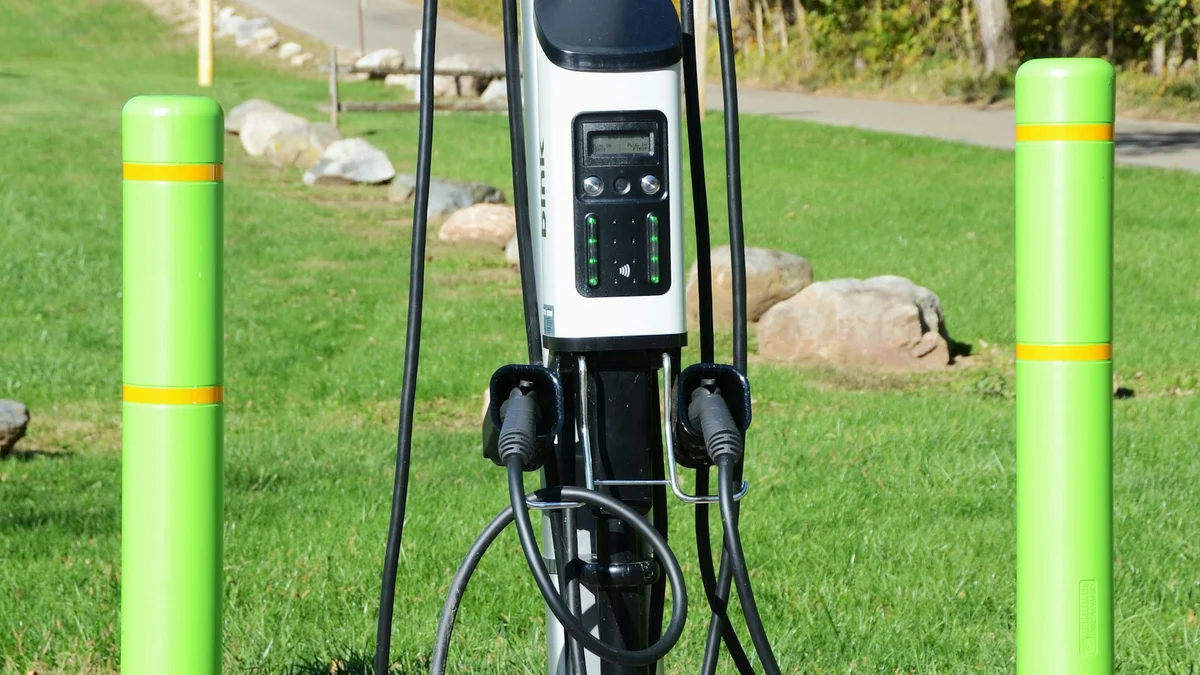
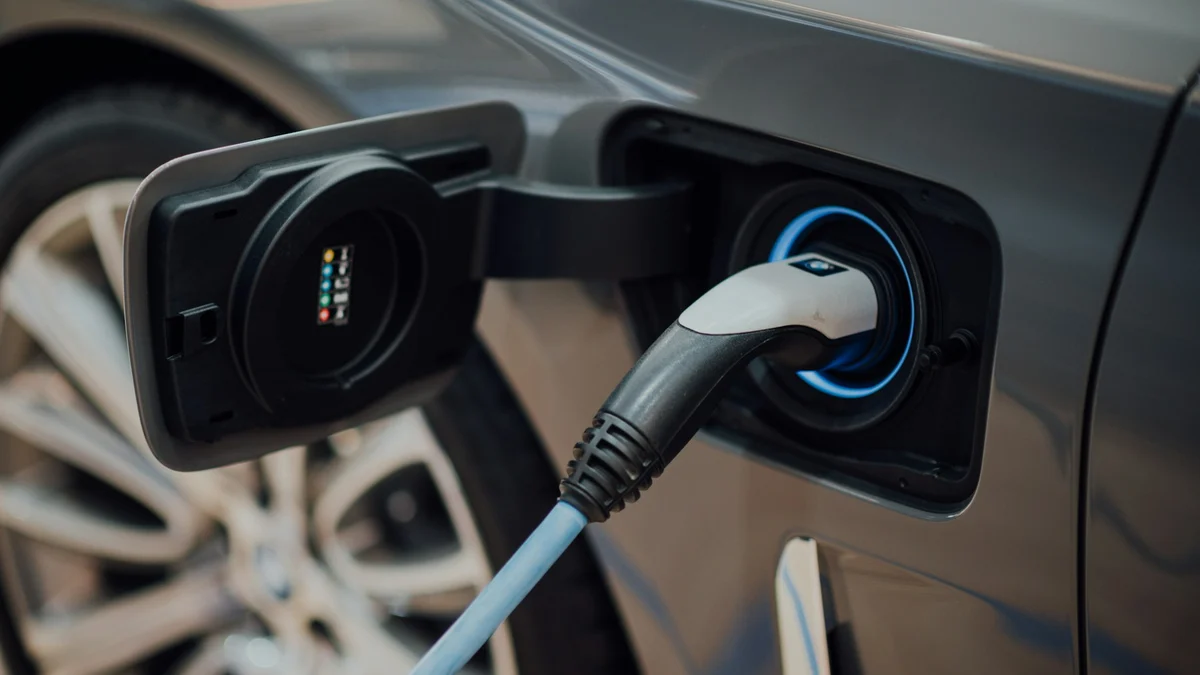
The cover is archival road or electric-mobility photography, not Honda’s embedded system, an ITS event image or our test. Add later facts from actual project progress rather than refreshing publication dates for appearance.
Common questions
Does being an EV automatically provide compatibility?
No. Check matching receiver hardware, system requirements and project verification instead of treating all EVs as the same transfer object.
Can 150 kW simply be multiplied by the whole journey time?
No. A future verification metric is not actual sustained received power, and only real transfer time belongs in that energy calculation.
Does Japanese FY2027 start in January?
The announcement explicitly identifies a fiscal year beginning April 1, 2027. Keep fiscal year, calendar year and actual opening date separate.