What changed
Distinguish regional control, central computing and a delivered consumer function. Evidence for one layer cannot establish all three.
A common foundation is not a car delivered today
Volkswagen’s release selects NXP S32K5 microcontrollers for a future zonal software-defined vehicle architecture developed by RV Tech. It describes cross-brand use and a planned first vehicle in 2027. Keep the words future and planned attached to that claim.
For a reader, the useful change is the development direction: previously dispersed electronic functions can be organized differently. Selecting a technology partner, developing an architecture and enabling a feature in a particular car remain different milestones. A report becomes misleading when it silently jumps from the first two to the third.
Regional control and central computing answer different questions
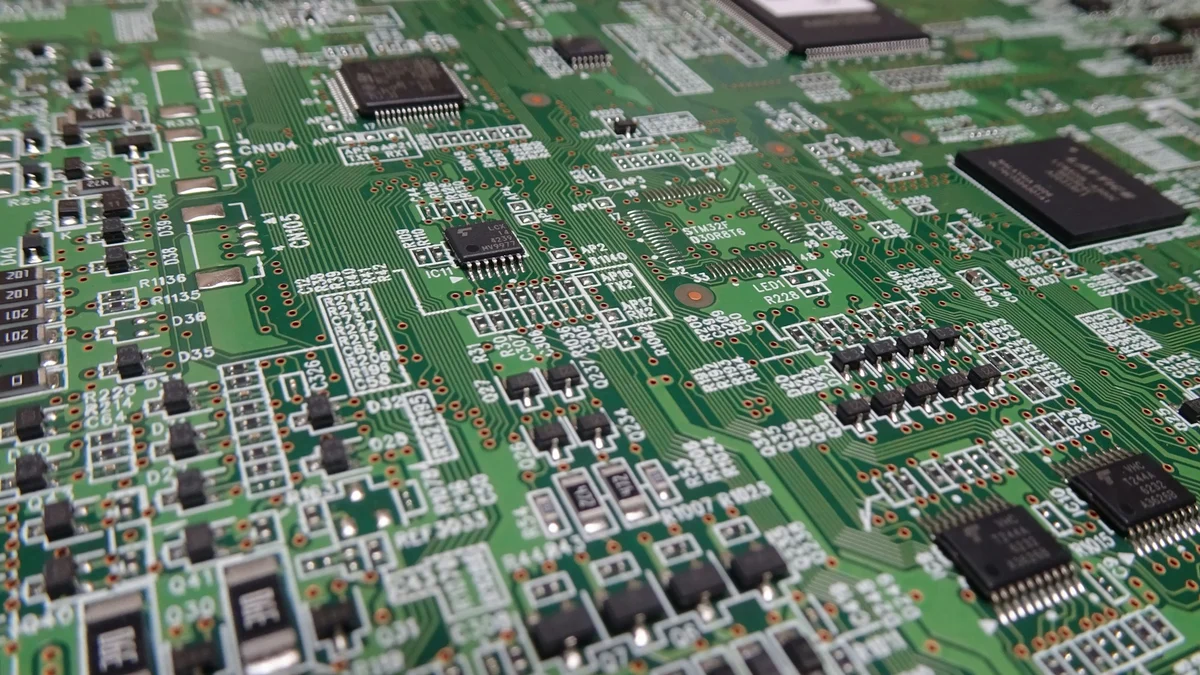
The release distinguishes controllers that connect regional sensors and actuators from high-performance central computing. Think about the stages a command has to pass through rather than assuming that every microcontroller mentioned alongside AI independently performs automated driving.
The following window example is an original conceptual explanation, not Volkswagen wiring or a safety test. A passenger asks to close the front-left window. The system must interpret the request, route it to the responsible area, operate the device and obtain state feedback. Describing that chain does not establish that a particular production vehicle has passed it.
| Layer | Illustrative responsibility | What it does not establish |
|---|---|---|
| User or upper-level feature | Request front-left window closure | Every voice or app entry point is supported |
| Regional control node | Connect local inputs and actuators | Consolidation removes the need for safety validation |
| Actuation and feedback | Report movement, state or an exception | All models share the same response and failure behavior |
Consolidation does not remove the verification work
The editorial significance is a change in how development and maintenance responsibilities are organized. A team must still say which layer owns the command, which owns feedback and what happens when communication fails. More concentrated control is not evidence that every function becomes faster or more energy efficient.
Owners should therefore continue looking for observable outcomes: a configuration listing, operating instructions, regional availability and an applicable software version. Without such evidence, this article cannot supply a performance uplift, failure rate or maintenance-cost saving. Those are separate questions requiring appropriate measurements.
Match the evidence to the decision
Understanding the direction
Read the original partnership announcement with its architecture and timing conditions.
Choosing a vehicle
Check the exact model, market, configuration and enabled software.
Assessing driver assistance
Read operating boundaries and driver duties; a chip partnership is not a feature specification.
Turn the announcement into a useful comparison record
Imagine comparing two vehicles. Instead of adding only a new-chip checkbox, describe the task you need: a particular parking scenario, phone connection or software-support requirement. A technology direction becomes useful purchasing evidence only when it is connected to that task and an applicable specification.
Record model, market, configuration, software version, source date and link. Keep enabled, announced and unknown states separate. If a manual and promotional page appear inconsistent, retain the question for official clarification. A sales demonstration is not automatically a delivery commitment for every region.
Checks for a current purchase decision
- Separate the partnership from consumer functions
- Identify the exact model and market
- Read prerequisites and driver responsibilities
- Do not turn a plan into an order-delivery date
- Keep unsupported speed, reliability and cost claims unknown
Look for the next piece of evidence
Useful follow-up evidence includes actual model configurations, readable instructions and the scope of enabled functions. Another partnership headline should not erase an unresolved question. This article contains no road test, independent hardware test or driving-automation classification.
For a related boundary, read why driverless factory movements differ from road functions. For a specific interface update, see the map and driver-assistance rollout checks. They answer different questions and require different evidence.